
Introduction
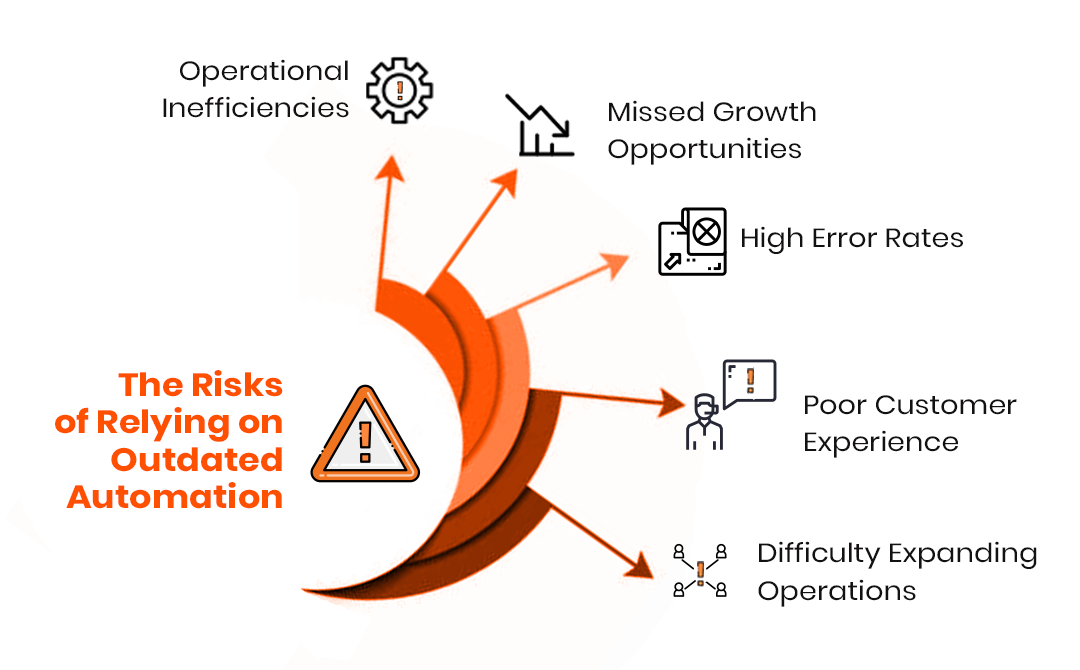
Organizations that continue relying solely on static, script-driven automation are increasingly constrained by its limitations. While traditional Robotic Process Automation (RPA) excels at repetitive, rule-based activities, it lacks the capacity to adapt, interpret nuance, or respond to change. As business ecosystems become more dynamic and interconnected, the need for automation that is not only efficient but also intelligent has become paramount.
Agentic AI addresses this gap. Unlike conventional RPA—built on fixed scripts and deterministic logic—Agentic AI systems reason, plan, learn, and autonomously execute tasks in complex environments. This shift represents a foundational transformation in how enterprises approach automation. It is therefore unsurprising that Gartner identified Agentic AI as a top strategic technology trend for 2025.
What Is RPA? A Brief Overview
Robotic Process Automation is designed to automate structured, rules-driven tasks by using software bots that mimic human actions. RPA typically handles functions such as data entry, document routing, and workflow processing with minimal human involvement.
Core Components of Traditional RPA
- Bots: Execute predefined tasks according to set instructions.
- Scripts: Provide exact steps for how tasks should be completed.
- Rule Engines: Govern decision-making within rigid, condition-based logic.
Traditional RPA offers speed, cost savings, accuracy, and scalability. However, its limitations become evident in environments that require contextual understanding, interpretation of unstructured data, or adaptation to ongoing change.
What Is Agentic AI?
Agentic AI refers to systems capable of acting autonomously toward defined goals by evaluating contextual variables, reasoning through options, and adapting their actions based on experience. These systems learn continuously from data, environment interactions, and feedback loops—allowing them to operate and make decisions with minimal human oversight.
Key Differentiators of Agentic AI
- Reasoning: Interprets real-time variables and makes context-aware decisions.
- Planning:Generates and adjusts multi-step workflows dynamically.
- Memory:Retains knowledge from previous actions to optimize future performance.
- Autonomy:Acts proactively, not simply in response to predefined prompts.
The impact is especially pronounced in industries such as manufacturing, where variation, speed, and operational resilience are crucial. Gartner projects that by 2026, 80% of enterprises will have deployed Generative AI-enabled applications, underscoring the accelerating shift toward intelligent automation.
Why Agentic AI Matters
As competitive pressures increase, organizations must balance efficiency, resilience, and agility. Agentic AI directly supports these objectives by moving beyond automation to intelligent orchestration.
Observed benefits include:
- Reduced operational downtime
- Improved decision-making accuracy
- Faster innovation cycles
- Enhanced organizational resilience
How Agentic AI Enhances RPA Automation
RPA delivers consistent, high-speed execution but cannot respond to unexpected inputs or complex scenarios. When paired with Agentic AI, RPA evolves from a script executor into a goal-directed system capable of contextual reasoning and dynamic adjustment.
Complementary Roles
- RPA: Executes structured, repetitive tasks at scale.
- Agentic AI: Interprets context, prioritizes actions, and adapts workflows in real time.
Together, they enable end-to-end automation that is efficient, flexible, and self-improving.
Real-World Applications of AI-Driven Automation
How Agentic AI Enhances RPA Automation
Modern RPA platforms such as UiPath, Automation Anywhere, and Blue Prism are rapidly integrating AI capabilities, cloud APIs, and machine learning modules. This convergence allows RPA to maintain high-volume execution while Agentic AI delivers contextual understanding, autonomous orchestration, and adaptive decision-making.
Core Components of the Converged Architecture
- Orchestration Layers: Coordinate workloads between bots and AI agents.
- Vector Databases & Knowledge Graphs: Provide semantic context and long-term memory.
- Agent Memory Modules: Enable agents to learn from past outcomes.
- Model Deployment Pipelines: Support scalable, continuously updated AI logic.
The outcome is a system that self-optimizes based on data, operational conditions, and enterprise objectives.
Building a Strategy: How to Implement RPA + Agentic AI at Scale
A staged, strategic approach ensures successful adoption and long-term value realization.
- Identify Suitable Use Cases
- Assess Data Quality and Infrastructure
- Integrate AI within Existing RPA Frameworks
- Establish Governance and Ethical Controls
- Model explainability
- Bias monitoring
- Ethical AI use policies
- Audit trails and version control
- Build Cross-Functional Teams
- Partner with Automation Consultants
Begin with high-volume, rules-based processes that are data-intensive. Agentic AI adds the most value where human intervention is frequent due to dynamic variables.
Clean, accessible data and transparent ownership are essential. Legacy systems and siloed data structures can impede AI effectiveness, especially in regulated industries.
Most modern RPA tools offer plug-and-play integration with LLMs, NLP engines, and machine learning APIs. This allows bots to evolve from rule-based executors into cognitive collaborators.
Governance frameworks should address:
Successful scaling requires collaboration between IT, operations, data science, and business units. AI literacy training ensures alignment and reduces resistance.
Expert practitioners provide industry knowledge, implementation best practices, and strategic oversight—significantly improving adoption success and reducing deployment risks.
From Task Automation to Autonomous Enterprise
In next-generation enterprises, AI agents orchestrate entire workflows, interacting seamlessly with humans, bots, and systems. These agents adapt processes in real time, respond to market shifts, and refine operations through continuous feedback loops.
Industries such as logistics and retail already benefit from systems that autonomously adjust pricing, route deliveries, and optimize inventory the moment conditions change.
The Technologies Powering the Shift
- Adaptive Process Orchestration: Dynamic coordination of bots, agents, and human tasks.
- Large Language Models (LLMs): Enable contextual understanding and conversational decision-making.
- Self-Healing Bots: Automatically detect and correct workflow disruptions.
- Digital Twins & Real-Time Simulation: Enable predictive scenario planning and process optimization.
- Contextual AI Agents: Operate with memory, goals, and enterprise-aligned priorities.